


The COVID-19 pandemic triggered a drastic shift in consumer shopping behavior giving rise to the popularity of hybrid shopping. Even after two years since the pandemic, the hybrid shopping model has not only persisted but has become a preferred choice for many shoppers.
Festival shopping, which is often associated with shopping at physical stores, has witnessed a shift, with hybrid shopping experience being preferred as the selected medium by customers. And why not? Besides being convenient and time-saving, online shopping platforms offer a larger variety than offline counterparts and provide exclusive discounts and deals (especially during festive seasons). Physical stores also tend to get overcrowded during festive times, making shopping an unpleasant experience. But customers cannot completely let go of the human touch while shopping, physical stores still get a significant footfall.
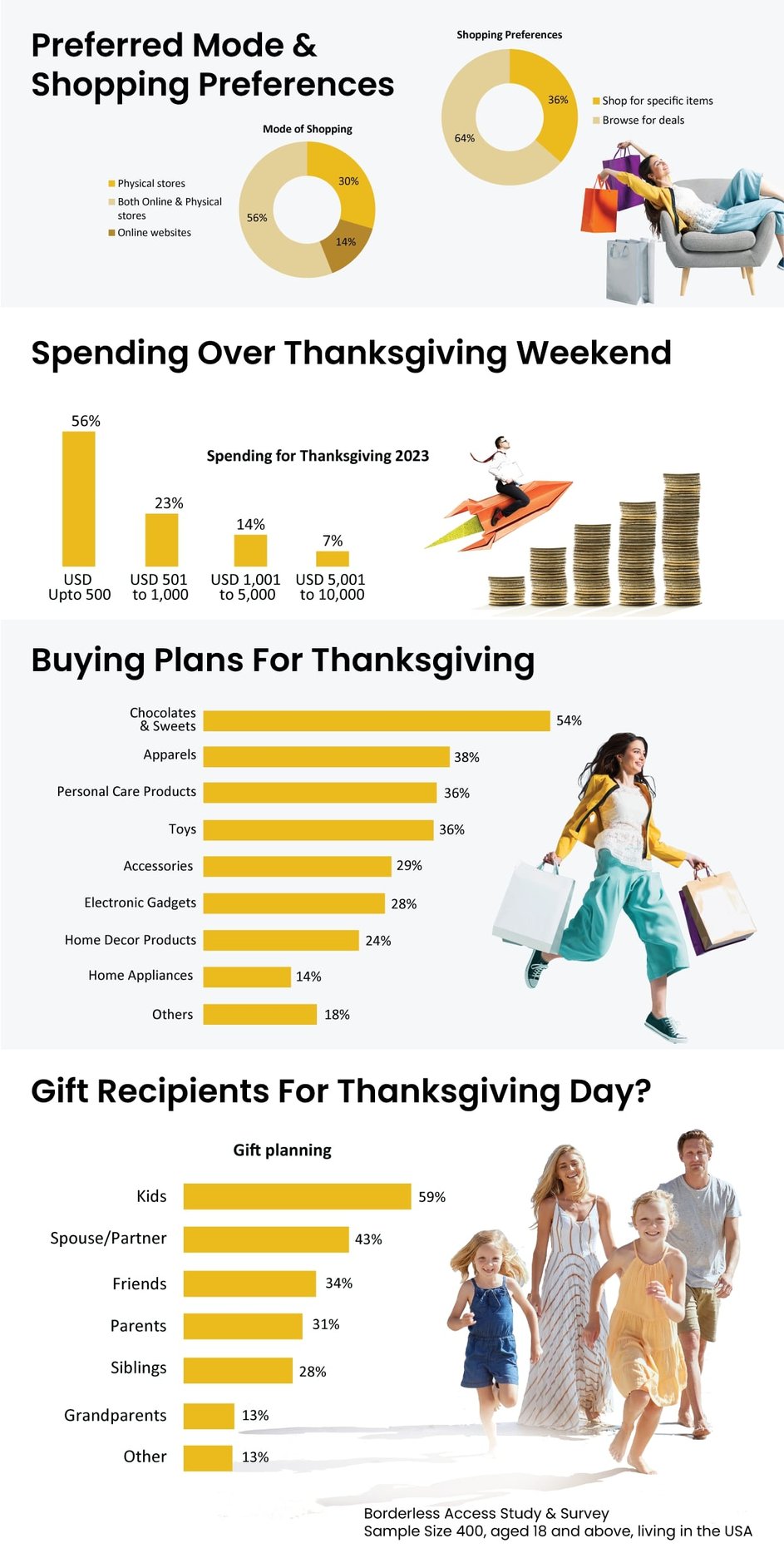
A study by Borderless Access on shopping for Thanksgiving showed that 56 percent of the respondents preferred a hybrid shopping experience. Thirty percent preferred going to a physical store for shopping, while only 14 percent favored a completely online experience. The study revealed that people value both the convenience of online shopping and the in-person experience of physical stores. Sixty-four percent of people prefer to browse for deals when shopping, while 36 percent shop for specific items.
Note: This analysis is derived from a methodologically robust survey conducted in September 2023, canvassing a demographically balanced sample of adults aged 18 to 45 living in the USA ensuring gender parity among participants—this in-depth understanding of the US consumer market and the nuanced preferences that influence consumer purchasing decisions.
BOPIS-Buy Online, Pick Up In-Store
To cater to this preference of hybrid shopping among customers, one concept that has become popular is Buy Online, Pick Up in Store (BOPIS). Here, customers can shop online from their homes and go to the store or pickup location when they are notified that their order is ready to be picked up.
Why Is Hybrid Shopping Experience Still Preferred?
Experience-centric retail
Customers do not visit a store or a shopping website just to purchase a particular product anymore. What they are looking for is a complete experience focused on engaging their senses and offering interactive and personalized options. Hybrid shopping experience continues to be favored as it is closely connected to the increased desire for building experience-centric retail. Such experiences can be created through interactive technologies, live demos, workshops, virtual try-ons, etc. The end goal for the retailer is to develop an emotional connection with the customer, which can eventually lead to long-term brand loyalty, surpassing just a transactional relationship.
Dependence on technology
Modern consumer shopping behavior has evolved to rely on technology to improve their shopping experience. A retailer needs to use technology at every stage of the buying journey to sustain itself in today’s ecosystem. As hybrid shopping experience combines online and in-person retail elements, retailers must rely heavily on various technologies to build a seamless and integrated omnichannel experience.
- Augmented Reality (AR) and Virtual Reality (VR)
Deploying AR and VR technologies in the retail sector has further accelerated the scope of creating immersive experiences for customers. Now, customers can virtually try on products like clothing, shoes and accessories, allowing them to visualize their products in their own environment. Virtual reality helps customers take virtual store tours in simulated environments and participate in interactive product demos. This reduces the gap between online and offline shopping experiences, providing a realistic way to explore products before making a final purchase.
- Interactive in-store tech
Touchscreens or interactive kiosks in stores provide access to online catalogs, reviews, and additional product information. Self-service kiosks enable in-store ordering or payments for items not physically available in the store.
- AI and data analytics
Like every other industry, AI and data analytics have also transformed the retail sector. Retailers have online and offline data available, which can be analyzed to get comprehensive insights into consumer behavior, preferences, pain points and shopping patterns.
These data-driven insights help in personalized marketing, offering tailored product recommendations. Predictive analytics can forecast trends and prepare retailers for changing market conditions to meet customer expectations.
- AI-enabled chatbots
Chatbots and AI-driven customer service assist with online queries and streamline interactions. They help shoppers with product queries, recommend items and offer support for navigating the website.
Retail Personalization
This is the era of hyper-personalization and every customer wants a tailored and unique experience . In fact, people are 40 percent more likely to spend more than they planned when they find the shopping experience to be highly personalized. By analyzing the data collected on consumer behavior and tracking their tastes, preferences, and shopping history, retailers build tailored recommendations and create personalized shopping experiences.
Such insights are not just restricted to enhancing the online shopping experience but also extended to physical stores to equip the staff with the right knowledge to cater to individual needs.
The balance between convenience and human touch
If any retailer goes overboard with catering to only one shopping medium, ignoring the other, it will fail to attract shoppers. Customers have selected hybrid shopping as their favorite shopping mode and it is time retailers strike a balance between online and brick-and-mortar stores to improve the buying journey while preserving and integrating the human touch.